7 Signs Your Cabinets Need Refinishing
Published on Jun 14, 2026
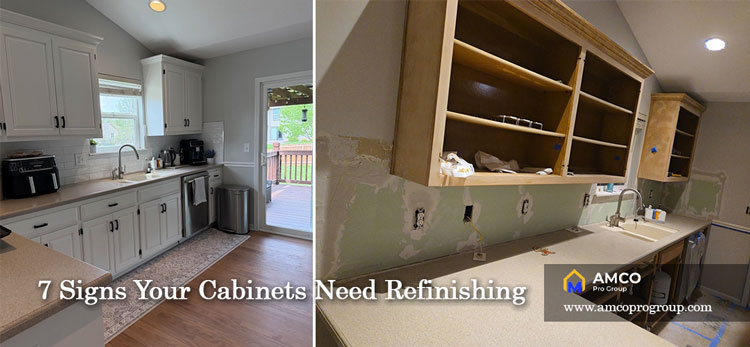
Many homeowners think worn cabinets mean it’s time for a full replacement. In many kitchens, that isn’t necessary. Kitchen cabinet refinishing can restore the look of cabinets that are still structurally solid, often at a fraction of the cost of installing new ones.
Scratches, fading, and worn finishes are common after years of daily use. The good news is that these issues usually affect only the surface. If the cabinet boxes and doors are still in good shape, refinishing can completely refresh the kitchen.
This guide explains the most common signs cabinets need refinishing, how to check if your cabinets are good candidates, and when replacing them may actually make more sense.
What Is Cabinet Refinishing
Cabinet refinishing focuses on restoring the existing cabinet surface instead of replacing the entire cabinet system. When cabinets are structurally sound, refinishing can dramatically improve the appearance of a kitchen without the high cost and disruption of a full remodel.
Many homeowners discover this option while researching kitchen cabinet refinishing as a way to update an older kitchen without changing the layout.
What Cabinet Refinishing Actually Means
Cabinet refinishing involves removing or repairing the old finish and applying a new stain, paint, or protective coating. The goal is to improve the appearance while keeping the original cabinet structure.
The process typically includes cleaning built‑up grease, sanding the old finish, repairing minor surface damage, and applying a new finish. Once completed, cabinets can look almost brand new, especially when combined with modern hardware.
Refinishing vs Refacing vs Replacing Cabinets
These renovation options are often confused, but they serve different purposes.
Cabinet refinishing keeps the existing cabinet doors and boxes while updating the finish with paint or stain. It’s usually the most affordable option.
Kitchen cabinet refacing replaces cabinet doors and drawer fronts while covering the cabinet boxes with new veneer. It provides a larger visual change but costs more than refinishing.
Cabinet replacement involves removing all existing cabinets and installing new ones. This option is typically part of a full kitchen remodel and is the most expensive solution.
Why Many Homeowners Choose Refinishing
Refinishing is a popular solution because it quickly solves cosmetic problems while keeping the existing kitchen structure.
Many kitchens contain solid wood cabinets that are still high quality even after 10–20 years. Instead of replacing them, Refinishing allows homeowners to modernize the look with new stains, paints, or finishes while keeping durable cabinetry in place, especially when comparing options like matte vs satin cabinet finish.
7 Clear Signs Your Cabinets Need Refinishing
Kitchen cabinets deal with daily exposure to grease, moisture, and constant use. Over time, the protective finish begins to wear down even when the cabinets themselves remain strong.
Recognizing the early signs can help you decide whether cabinet refinishing is the right solution.
Faded or Discolored Cabinet Finish
Sunlight and everyday cleaning gradually fade cabinet finishes. Cabinets near windows often become lighter than the rest of the kitchen, while areas around handles may darken from frequent contact. This uneven color is one of the clearest signs that kitchen cabinet refinishing may be needed.
Visible Scratches, Chips, or Surface Wear
Scratches around cabinet handles and drawer pulls are very common. Over time the finish can wear away in high‑traffic areas, exposing the wood underneath. In most cases this damage is only surface‑level and can be repaired during a kitchen cabinet refinishing project.
Peeling, Cracking, or Bubbling Finish
Older finishes may begin to peel or crack, especially in areas exposed to heat or moisture. Bubbling or peeling varnish often appears near sinks, dishwashers, or cooking areas. When this happens, refinishing becomes the most effective way to restore the surface.
Water Damage or Staining
Moisture is one of the biggest causes of cabinet wear. Cabinets under sinks or near dishwashers often develop stains or discoloration. Minor water damage usually affects only the finish, making cabinet refinishing a practical way to restore the appearance.
Cabinets Look Outdated But Are Structurally Sound
Sometimes cabinets function perfectly but look outdated, and consulting modern interior design services leawood can help align them with current design trends. Older kitchens often feature dark oak tones or yellowed finishes that no longer match modern design trends. Refinishing allows homeowners to update the color or style without replacing the cabinets, often inspired by trends highlighted in best modern cabinet colors.
Grease and Grime That Won’t Come Off
Years of cooking can leave cabinets coated with grease that cleaning products can’t fully remove. This buildup often makes cabinets look dull or sticky. Refinishing removes the damaged surface and replaces it with a fresh, clean finish.
Uneven Color or Sun Fading
Sun exposure can cause noticeable color differences across cabinets. Doors near windows may fade faster than those in shaded areas, leaving the kitchen looking uneven. Cabinet refinishing restores a consistent color and finish throughout the space.
How to Check If Your Cabinets Are Good Candidates for Refinishing
Not every cabinet can be refinished. The most important factor is whether the cabinet structure is still strong.
A quick inspection can usually determine if refinishing wood kitchen cabinets is a realistic option.
Cabinet Structure and Material Quality
High‑quality cabinets made from solid wood or plywood are excellent candidates for refinishing. These materials hold up well during sanding and finishing and can often be restored multiple times over their lifespan.
Inspecting Wood, Veneer, or Laminate Surfaces
Different cabinet materials respond differently to refinishing.
Solid wood cabinets are the easiest to refinish because they can be sanded and stained several times. Wood veneer cabinets can also be refinished carefully. Laminate cabinets are more difficult to refinish and are usually better suited for painting rather than staining.
When Cabinets Are Too Damaged to Refinish
Some cabinets are simply too damaged for refinishing. Warped cabinet boxes, water‑swollen particle board, or broken cabinet frames usually require replacement. In these cases, refinishing will not fix the underlying structural problems.
Quick 5‑Minute Cabinet Inspection Checklist
A simple inspection can reveal whether refinishing is possible. Open several cabinet doors and check that the frames and hinges remain sturdy. Look under the sink for swelling or moisture damage, and inspect worn areas to determine whether the damage is only on the surface. If the cabinet boxes remain solid and square, refinishing is often a worthwhile option.
Benefits of Refinishing Cabinets Instead of Replacing Them
Many homeowners choose kitchen cabinet refinishing because it delivers a major visual upgrade without the cost of replacing cabinets.
Cost Savings Compared to Full Replacement
Replacing cabinets involves demolition, purchasing new cabinets, and installation costs, and reviewing common pitfalls in kitchen remodeling mistakes to avoid can help homeowners avoid expensive decisions. Refinishing keeps the existing cabinets and updates only the surface, which often makes it 60–80% cheaper than replacement.
Faster Kitchen Transformation
A full cabinet replacement can take several weeks, especially when following a complete kitchen remodel timeline realistic plan. In contrast, most cabinet refinishing projects can be completed in just a few days, making it a convenient option for homeowners who want a faster kitchen upgrade.
Eco‑Friendly Home Improvement Option
Refinishing also reduces construction waste. Instead of sending old cabinets to a landfill, the existing cabinetry is restored and reused, making it a more sustainable renovation choice.
Maintaining Solid Wood Cabinet Quality
Many older kitchens contain solid hardwood cabinets that would be expensive to replicate today. Refinishing preserves that durable construction while giving the kitchen a more modern look.
When Cabinet Refinishing Is NOT the Right Solution
Although refinishing works well in many kitchens, it isn’t always the best choice.
Structural Cabinet Damage
If cabinets are pulling away from the wall, have broken frames, or severely sagging shelves, refinishing will not solve the problem. Structural damage usually requires cabinet replacement.
Cheap Particle Board Cabinets
Low‑quality particle board cabinets tend to swell or weaken after years of moisture exposure. These materials often do not hold finishes well, making refinishing ineffective.
Layout Changes or Major Kitchen Remodels
If you plan to redesign the kitchen layout, move appliances, or add new cabinetry, refinishing existing cabinets may not fit the new design. In these cases, installing new cabinets is usually the better option, particularly when guided by experienced renovation experts leawood.
What the Cabinet Refinishing Process Looks Like
Professional cabinet refinishing requires careful preparation to achieve durable results, which is why many homeowners work with specialists in refinishing and repainting leawood. The process focuses on restoring the cabinet surface while protecting the underlying wood.
Cleaning and Surface Preparation
The first step removes years of grease, dust, and residue from cabinet surfaces. Doors and hardware are usually removed so the cabinets can be cleaned and prepared properly.
Sanding and Repairing Surfaces
Next, the old finish is sanded down and minor scratches or dents are repaired. This step creates a smooth surface so the new finish can adhere properly.
Staining, Painting, or Sealing
After preparation, the new finish is applied. This may include staining wood cabinets, painting cabinet doors, or applying protective clear coats using recommendations similar to those discussed in best cabinet paint. The chosen finish determines the final appearance and durability.
Final Finishing and Reinstallation
Once the finish has cured, cabinet doors and hardware are reinstalled. At this stage the kitchen typically looks refreshed and updated without the cost of a full cabinet replacement.
Conclusion
If your cabinets look worn but remain structurally solid, kitchen cabinet refinishing can restore their appearance without the cost of replacement. Fading, scratches, and outdated finishes are often surface issues that refinishing can fix.
For many homeowners, cabinet refinishing is a cost‑effective way to refresh a kitchen and extend the life of existing cabinets, especially when hiring professionals offering refinishing and repainting overland park.


