Common Home Maintenance Tasks Every Homeowner Should Know
Published on Sep 19, 2026
Regular home maintenance helps you catch leaks, equipment problems, exterior damage, and safety issues before they turn into larger and more expensive repairs. A practical maintenance routine should cover the major systems of your home, follow a clear schedule, and distinguish between simple homeowner tasks and work that requires a professional.
Some exterior maintenance issues, such as cracked or deteriorating stucco, may require more than routine upkeep and can call for professional Stucco Repair & Installation in Leawood to prevent moisture from reaching the underlying structure.
Owning a home means keeping track of more than visible problems. Your HVAC system, plumbing, roof, gutters, electrical components, drainage, and safety devices can gradually deteriorate even when everything appears to be working normally.
The most useful approach is to divide home maintenance tasks into three groups: routine checks you can perform yourself, seasonal maintenance that follows weather conditions, and professional inspections or services that require specialized equipment or expertise.
Why Regular Home Maintenance Matters
Regular home maintenance helps you identify developing problems while they are still limited to a specific component or system. A small plumbing leak, clogged gutter, dirty HVAC filter, or damaged area of roofing can become significantly more difficult to address when it is ignored.The same principle applies to hardwood flooring, where addressing early signs of wear and surface damage can help prevent more extensive deterioration that may eventually require professional Hardwood Floor Refinishing in Leawood .
Prevent Small Problems From Becoming Expensive Repairs
Routine inspections allow you to notice early warning signs such as water stains, unusual HVAC noises, slow drains, damaged shingles, recurring electrical trips, or moisture around windows and doors. Finding these conditions early gives you more opportunity to correct the underlying problem before it causes damage to surrounding materials.
For example, a minor roof leak can allow moisture to reach insulation, drywall, framing, or interior finishes, while a small plumbing leak under a sink can gradually damage cabinetry and flooring.
Protect Your Home's Comfort and Efficiency
Maintenance also keeps systems operating closer to their intended performance. Replacing a clogged HVAC filter, keeping outdoor equipment clear of debris, maintaining proper drainage, and sealing obvious air leaks can help prevent unnecessary strain on household systems.
Heating and cooling equipment deserves particular attention because reduced airflow, neglected filters, dirty components, or mechanical problems can affect both indoor comfort and equipment performance.
Preserve the Condition of Your Property
Preventive maintenance protects the physical condition of the components that make up your home. Regular attention to roofing, siding, gutters, caulking, drainage, plumbing fixtures, and mechanical systems reduces the chance that normal wear will develop into extensive property damage.
Essential Home Maintenance Tasks for Major Systems
The most important home maintenance tasks involve the systems that protect your home from temperature problems, water intrusion, equipment failure, and safety hazards.
HVAC System Maintenance
HVAC maintenance should include checking air filters, monitoring airflow, keeping outdoor equipment clear, and arranging professional service when the system shows performance or mechanical problems.
Air filters should be checked regularly because their replacement interval varies according to the filter type, system design, household conditions, pets, and indoor air quality requirements. A visibly loaded filter can restrict airflow and place additional demand on the heating or cooling system.
You should also pay attention to unusual sounds, inconsistent room temperatures, weak airflow, unexpected increases in energy consumption, or repeated cycling because these conditions can indicate an HVAC problem that requires professional diagnosis.
Plumbing and Water Systems
Plumbing maintenance starts with regularly checking exposed pipes, faucets, toilets, drains, water supply connections, and areas around water-using appliances for signs of leakage.
Look underneath sinks and around toilets for moisture, staining, corrosion, or damaged seals because these areas can develop small leaks that remain unnoticed until surrounding materials begin to deteriorate.
Your water heater also deserves periodic attention because sediment accumulation, corrosion, leaking connections, or unusual operating noises can indicate developing problems.
Roof, Gutters, and Exterior
Your roof and drainage system should be inspected for visible damage, accumulated debris, damaged shingles, blocked gutters, separated downspouts, and areas where water may collect against the home.
Gutters need to move rainwater away from the roof and foundation, so leaves, branches, and other debris should not be allowed to obstruct the flow. Downspouts should discharge water far enough away from the foundation to reduce unnecessary moisture exposure.
Exterior caulking, siding, window and door seals, and visible areas around penetrations should also be checked for deterioration because gaps can allow water and air to enter the building envelope.
Electrical and Home Safety Systems
Home safety maintenance should include testing smoke alarms, carbon monoxide detectors, GFCI outlets, and other installed safety devices according to their manufacturer instructions.
Repeated circuit-breaker trips, buzzing outlets, damaged electrical components, burning odors, or unusual heat around switches and receptacles should not be treated as routine DIY maintenance because they can indicate an electrical fault requiring qualified service.
Home Maintenance Tasks You Should Do Monthly
Monthly maintenance should focus on quick checks that can reveal leaks, airflow problems, safety issues, and other changes before they become difficult to identify.
Check for Water Leaks
Inspect areas under sinks, around toilets, near water heaters, and around visible plumbing connections for moisture, staining, corrosion, or unexplained water accumulation.
A recurring damp spot or water stain should be investigated rather than repeatedly cleaned because the visible moisture may be only the surface symptom of a concealed plumbing problem.
Check HVAC Filters and Airflow
Check your HVAC filter at regular intervals and replace it according to the filter manufacturer's specifications and the operating conditions of your home.
You should also check whether supply vents and return-air openings are unobstructed because furniture, rugs, dust, or other objects can interfere with intended airflow.
Test Safety Devices
Test smoke and carbon monoxide alarms according to the manufacturer's instructions and replace batteries or the entire unit when required by the device specifications.
GFCI outlets should also be tested using their built-in test and reset functions when applicable, particularly in areas where electrical outlets are exposed to moisture.
Inspect High-Use Areas
Monthly checks should include frequently used plumbing fixtures, drains, appliances, doors, windows, and other areas where small changes are easy to notice.
Pay particular attention to new dripping sounds, slow drainage, unusual odors, damaged seals, condensation, or changes in how household equipment normally operates.
Seasonal Home Maintenance Tasks
Seasonal maintenance prepares your home for changes in temperature, precipitation, humidity, and heating or cooling demand.
Spring Home Maintenance
Spring is a useful time to inspect the exterior after winter weather and prepare the home for increased rainfall and warmer temperatures.
Check gutters and downspouts for winter debris, inspect visible roofing areas for damage, examine exterior seals, and make sure water can drain away from the foundation.
Before regular cooling season begins, check the HVAC system for airflow problems and arrange professional service if the equipment shows unusual performance or mechanical symptoms.
Summer Home Maintenance
Summer maintenance should focus on cooling performance, exterior moisture management, and areas exposed to prolonged heat and sunlight.
Keep the outdoor HVAC unit clear of leaves, vegetation, and other debris that could interfere with airflow around the equipment.
Inspect exterior surfaces and drainage areas after heavy rain because standing water, recurring dampness, or water flowing toward the foundation can indicate a drainage problem.
Fall Home Maintenance
Fall maintenance should prepare the property for colder temperatures while addressing leaves and debris that can accumulate around the exterior.
Clean gutters and confirm that downspouts can discharge water properly before periods of heavy rain, snow, or freezing temperatures.
Before sustained cold weather arrives, make sure the heating system is operating properly and inspect visible weatherstripping around exterior doors and windows for deterioration.
Winter Home Maintenance
Winter maintenance should focus on preventing freezing, maintaining reliable heating, and reducing the risk of weather-related damage.
Protect exposed plumbing from freezing temperatures where appropriate and pay attention to areas such as exterior walls, crawl spaces, garages, and other locations that may have greater exposure to cold.
Monitor your heating system during periods of heavy use and respond promptly to unusual odors, noises, inadequate heating, or repeated system shutdowns.
Which Home Maintenance Tasks Can You DIY?
Many routine maintenance tasks can be handled by homeowners when they involve inspection, cleaning, basic replacement, or manufacturer-approved testing rather than specialized repair work.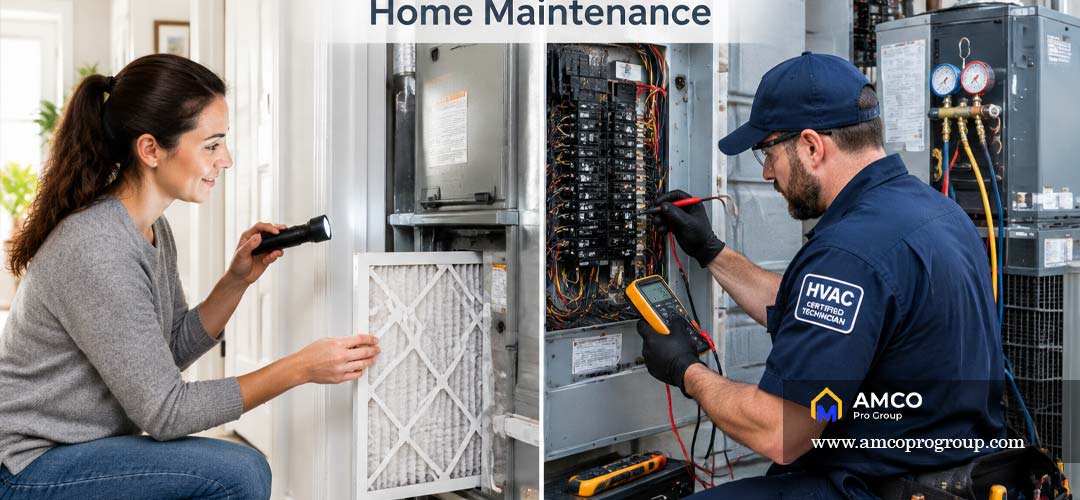
Maintenance Tasks Most Homeowners Can Handle
You can generally manage tasks such as replacing HVAC filters, testing safety alarms, checking visible plumbing connections, cleaning accessible gutters when conditions are safe, replacing worn weatherstripping, and keeping exterior drainage areas free of debris.
Always follow the equipment manufacturer's instructions and use appropriate safety equipment when performing maintenance around ladders, electrical components, mechanical equipment, or elevated areas.
Maintenance Tasks That Need Professional Help
Professional assistance is appropriate when a problem involves electrical wiring, gas systems, structural components, major HVAC repairs, significant roof damage, concealed plumbing, or equipment that requires specialized diagnostic tools.
A maintenance task should stop being a DIY project when accessing the component requires working with energized electrical systems, gas connections, structural elements, or conditions where a mistake could create a safety hazard or substantial property damage.
Warning Signs You Should Not Ignore
Water stains, recurring leaks, burning odors, repeated circuit-breaker trips, unexplained HVAC performance changes, persistent moisture, and visible structural movement deserve investigation rather than repeated temporary fixes.
These warning signs can indicate that a routine maintenance issue has developed into a repair problem requiring a qualified professional to identify the underlying cause.
How Often Should You Perform Home Maintenance?
A practical maintenance schedule should combine monthly checks, seasonal inspections, and annual professional services rather than treating every task as a once-a-year responsibility.
Monthly Tasks
Use a monthly routine to check visible plumbing areas, HVAC filters, safety devices, drains, frequently used fixtures, and other components where small changes can develop quickly.
Monthly checks should remain short enough to become a consistent habit rather than an extensive inspection that homeowners repeatedly postpone.
Seasonal Tasks
Seasonal maintenance should follow the conditions your home experiences during spring, summer, fall, and winter.
For example, gutter maintenance becomes particularly important when leaves accumulate, while HVAC preparation becomes more relevant before periods of heavy heating or cooling use.
Annual Tasks
Annual maintenance can include professional HVAC service, a detailed roof inspection where appropriate, inspection of systems specific to your property, and servicing equipment according to manufacturer recommendations.
Some homes require additional annual or periodic inspections because of features such as fireplaces, sump pumps, septic systems, older mechanical equipment, or particular environmental conditions.
Keep a Home Maintenance Record
Keep a simple record of inspections, filter replacements, professional service, equipment repairs, and major component replacements.
A maintenance record makes it easier to identify recurring problems, track service intervals, and determine when equipment or building components may require further attention.
When Should You Hire a Professional?
You should hire a professional when maintenance involves specialized systems, significant safety risks, concealed damage, or a problem that cannot be diagnosed through a basic visual inspection.
Safety-Critical Problems
Electrical faults, gas-related problems, structural concerns, major HVAC failures, and other safety-sensitive conditions should be evaluated by qualified professionals rather than treated as ordinary homeowner maintenance.
Professional service is especially important when the correct diagnosis requires testing equipment, specialized knowledge, permits, or work on components that present significant hazards.
Problems That Can Cause Major Property Damage
A persistent roof leak, substantial plumbing failure, drainage problem, or recurring moisture issue can cause damage beyond the original component if it remains unresolved.
Professional evaluation can identify the source of the problem and determine whether the appropriate response is maintenance, repair, replacement, or a larger project.
When Maintenance Turns Into a Repair or Renovation
Routine maintenance ends when the goal changes from preserving an existing component to correcting significant damage or changing the property's layout, materials, or function.
If you are unsure whether a project requires a simple repair or a larger renovation, understanding the difference between these scopes can help you choose the appropriate next step.
Simple Home Maintenance Checklist for Homeowners
Use a simple schedule to keep recurring maintenance from becoming an afterthought.
FrequencyWhat to Check
Monthly
HVAC filter, visible plumbing leaks, drains, safety devices, high-use fixtures
Spring
Roof, gutters, downspouts, exterior seals, drainage, cooling system
Summer
AC performance, outdoor HVAC area, exterior moisture, drainage
Fall
Gutters, heating system, weatherstripping, exterior areas
Winter
Heating performance, exposed plumbing, indoor moisture, cold-weather risks
Annually
Professional HVAC service, major system inspections, equipment-specific maintenance
The exact frequency can vary according to your home's age, construction, climate, equipment, manufacturer's recommendations, and previous maintenance history. A newer home with modern equipment may have different service requirements from an older property with aging mechanical and exterior components.