Common Home Maintenance Tasks Every Homeowner Should Know
Published on Sep 14, 2026
Home maintenance is easier to manage when homeowners regularly inspect the systems, surfaces, and areas that can develop problems through normal use, weather exposure, moisture, and wear. A consistent maintenance routine helps identify small issues before they develop into larger repairs and keeps the home’s major components functioning properly.
The most useful approach is not trying to complete every maintenance task at once, but creating a repeatable schedule for plumbing, HVAC, electrical safety, roofing, gutters, appliances, exterior surfaces, drainage, and interior areas. When maintaining or improving your home goes beyond routine upkeep, professional help can make the process easier, especially for interior spaces that need a more comprehensive update. AMCO Pro Group provides Modern Interior Design Services Leawood to help homeowners plan and improve their interior spaces.
What Are the Most Important Home Maintenance Tasks?
The most important home maintenance tasks are checking for water leaks, maintaining HVAC filters, inspecting the roof and gutters, testing smoke and carbon monoxide alarms, checking plumbing fixtures, cleaning dryer vents, inspecting exterior surfaces, and addressing visible damage before it worsens.
These tasks cover the areas where routine inspection can reveal early signs of moisture, deterioration, restricted airflow, electrical problems, or component failure.
Check for Plumbing Leaks
Inspecting plumbing connections regularly can help homeowners find leaks around sinks, toilets, faucets, appliances, exposed pipes, and water heaters before moisture damages surrounding materials.
Look for dripping fixtures, water stains, damp cabinets, discoloration around pipe connections, unexplained moisture, and changes in water usage that could indicate a hidden leak. These checks are particularly important in kitchens and bathrooms, where multiple plumbing fixtures and water connections are located.
Leaks deserve prompt attention because water can damage flooring, cabinetry, drywall, insulation, and subfloor materials even when the original plumbing problem appears minor. When water damage or ongoing plumbing issues affect a kitchen or bathroom and routine maintenance is no longer enough, Kitchen and Bathroom Renovation Experts in Leawood can help restore and improve the affected space.
Replace and Check HVAC Filters
Replacing or cleaning HVAC filters according to the equipment manufacturer's instructions helps maintain airflow and prevents accumulated dust from restricting the system.
A heavily loaded filter can reduce airflow and make the heating or cooling system work harder, while an incorrect filter type can affect system performance.
Homeowners should also keep supply registers and return-air openings clear of furniture, rugs, curtains, and accumulated dust.
Inspect the Roof for Visible Damage
A roof inspection should look for missing or damaged shingles, visible deterioration, damaged flashing, debris accumulation, and signs of water intrusion around accessible areas.
Roof problems are easier to address when identified before repeated moisture exposure reaches the attic, insulation, ceilings, or interior walls.
Homeowners should avoid climbing onto a roof when they do not have the appropriate equipment or experience, particularly when the surface is wet, steep, or damaged.
Clean Gutters and Downspouts
Gutters and downspouts should remain clear enough to move rainwater away from the roof and foundation.
Leaves, branches, sediment, and other debris can restrict drainage and cause water to overflow against exterior walls or collect near the foundation.
After cleaning the gutters, check that downspouts discharge water far enough away from the house to prevent unnecessary moisture accumulation around the foundation.
Inspect Windows and Exterior Doors
Check windows and exterior doors for damaged seals, deteriorated weatherstripping, visible gaps, condensation problems, and signs of water intrusion.
Damaged seals can allow outside air and moisture to enter around openings, while deteriorated caulking can create pathways for water to reach surrounding materials.
Pay particular attention to areas where interior paint, drywall, trim, or flooring shows unexplained discoloration near an exterior opening.
Which Home Maintenance Tasks Should You Do Regularly?
Regular home maintenance should be divided into short monthly checks, seasonal inspections, and less frequent professional servicing so that important systems are not forgotten.
Freddie Mac's homeowner checklist similarly separates routine maintenance from spring/summer and fall/winter tasks, including HVAC, plumbing, gutters, roof, appliances, safety devices, and exterior components.
Test Smoke and Carbon Monoxide Alarms
Test smoke alarms and carbon monoxide alarms regularly using the manufacturer's testing procedure and replace batteries or complete units according to their instructions.
A working alarm provides an important early warning when smoke or carbon monoxide creates a dangerous condition inside the home.
Homeowners should also make sure alarms remain accessible and are not obstructed by furniture, decorations, or other objects.
Clean the Dryer Vent
Cleaning the dryer lint screen after each load and periodically checking the dryer vent helps maintain proper airflow through the appliance.
A restricted dryer vent can increase drying time and cause the appliance to operate less efficiently.
The exterior dryer vent opening should also remain free from lint, nests, leaves, and other debris that can restrict exhaust airflow.
Check Drains and Plumbing Fixtures
Slow drains, recurring odors, dripping faucets, and moisture around plumbing fixtures can indicate developing plumbing problems that deserve investigation.
Check bathroom sinks, tubs, showers, toilets, kitchen sinks, and visible supply connections for leaks or drainage changes.
Addressing a small plumbing problem early can prevent prolonged moisture exposure to cabinets, flooring, walls, and other nearby materials.
Inspect the Water Heater Area
Look around the water heater for visible leaks, corrosion, moisture, damaged connections, or unusual conditions around the unit.
The maintenance requirements of a water heater depend on its type, installation, age, and manufacturer specifications, so homeowners should follow the equipment documentation rather than applying one maintenance schedule to every system.
A professional should evaluate significant leaks, pressure-related concerns, gas connections, electrical components, or other conditions that exceed routine homeowner inspection.
What Exterior Home Maintenance Should Homeowners Do?
Exterior home maintenance should focus on water management, surface deterioration, drainage, openings, and components exposed to weather throughout the year.
Check Exterior Walls and Finishes
Walk around the property periodically and look for cracking, peeling paint, damaged trim, deteriorated caulking, staining, loose materials, or other visible changes to exterior surfaces.
Exterior deterioration can allow moisture to reach underlying materials when damaged areas remain exposed to rain and changing weather conditions.
The appropriate repair depends on the exterior material, the cause of the damage, and whether the problem is limited to the finish or involves the underlying structure.
Inspect the Foundation and Drainage
Check accessible areas around the foundation for standing water, soil erosion, visible cracks, and drainage conditions that direct water toward the house.
Proper grading should generally move surface water away from the foundation rather than allowing water to collect against the building.
Foundation concerns should be evaluated professionally when cracks are significant, changing, accompanied by water intrusion, or associated with movement or structural symptoms.
Maintain Caulking Around Exterior Openings
Exterior caulking around windows, doors, penetrations, and other openings should be inspected for cracking, separation, shrinkage, or loss of adhesion.
Damaged sealant can create openings where rainwater enters wall assemblies and surrounding materials.
Replacing deteriorated caulking is a maintenance task, but homeowners should first identify whether the damaged sealant is a symptom of movement, improper installation, or a larger exterior problem.
What Interior Home Maintenance Tasks Should You Know?
Interior maintenance involves monitoring surfaces, fixtures, appliances, ventilation, moisture-prone rooms, and areas where small defects can become expensive damage.
Inspect Ceilings and Walls for Water Damage
Look for new stains, bubbling paint, peeling surfaces, discoloration, soft drywall, or unexplained changes around ceilings and walls.
A water stain is not necessarily the original source of the problem because moisture can travel through ceilings, walls, insulation, and framing before becoming visible.
Do not simply paint over a recurring stain without identifying and correcting the source of moisture.
Clean Bathroom Exhaust Fans
Bathroom exhaust fans should remain clean and functional so that moisture generated during showers can be removed from the room.
Dust accumulation on the fan and grille can reduce airflow and make ventilation less effective.
Poor bathroom ventilation can contribute to persistent humidity and moisture-related deterioration around ceilings, walls, finishes, and other surfaces.
Check Kitchen and Bathroom Caulking
Inspect caulking around sinks, countertops, tubs, showers, backsplashes, and other moisture-exposed joints for cracking, gaps, discoloration, or separation.
Damaged sealant can allow water to reach areas that are not designed for repeated moisture exposure.
The correct repair depends on the material and location, so homeowners should use a compatible sealant rather than applying the same product to every surface.
How Often Should You Perform Home Maintenance?
Home maintenance should be scheduled according to how frequently each component is used, how quickly it accumulates debris, and how much exposure it receives from moisture or weather.
Monthly Maintenance Tasks
Monthly checks can include testing safety alarms, looking for plumbing leaks, checking HVAC filters, inspecting visible appliances for unusual conditions, and walking around the property for new damage.
These short inspections are useful because they create frequent opportunities to notice changes before they become difficult to trace.
Seasonal Maintenance Tasks
Seasonal maintenance should address systems affected by changing temperatures, rainfall, humidity, storms, and heating or cooling demand.
Spring is a useful time to inspect winter-related exterior damage, roof drainage, gutters, plumbing, and outdoor areas.
Summer maintenance should emphasize cooling equipment, exterior finishes, drainage, landscaping-related conditions, and areas exposed to heat.
Fall maintenance should prepare the property for colder weather by checking heating systems, exterior openings, gutters, drainage, and other weather-sensitive components.
Winter maintenance should focus on monitoring heating performance, preventing frozen plumbing where applicable, watching for moisture problems, and responding quickly to weather-related damage.
A seasonal approach is also recommended by organizations such as the Better Business Bureau and Fannie Mae because different parts of a home require attention as weather conditions change.
Which Home Maintenance Tasks Should You Leave to a Professional?
Homeowners can handle many visual inspections and routine cleaning tasks, but specialized electrical, structural, roofing, HVAC, plumbing, and other technical work should be evaluated by qualified professionals when the problem exceeds basic maintenance.
Electrical Problems
Burning odors, repeated breaker trips, damaged wiring, sparking outlets, overheating electrical components, or unexplained electrical behavior should not be treated as ordinary maintenance issues.
Electrical repairs can involve shock and fire hazards, so homeowners should avoid attempting work that requires opening electrical equipment or modifying wiring without the appropriate knowledge and authorization.
Major Plumbing Problems
A professional plumber should evaluate significant leaks, persistent drainage problems, sewer-related concerns, concealed pipe leaks, water-pressure abnormalities, or damage that continues after a basic fixture repair.
A plumbing problem can extend beyond the visible fixture and affect walls, cabinets, floors, insulation, or structural materials.
Roof and Structural Concerns
Professional evaluation is appropriate when homeowners find significant roof damage, structural movement, extensive water intrusion, major foundation cracking, or other conditions that cannot be safely assessed from ground level.
The goal of routine maintenance is early detection, not replacing specialized inspections performed by qualified professionals.
Home Maintenance vs. Home Repair: What Is the Difference?
Home maintenance consists of recurring inspections, cleaning, adjustments, and preventive actions intended to keep a property functioning properly, while home repair addresses a component that has already failed or become damaged.
Changing an HVAC filter is maintenance because it is a recurring preventive task, while replacing a failed HVAC component is a repair.
Cleaning gutters is maintenance because it preserves proper drainage, while repairing a damaged gutter section is a repair.
Checking for plumbing leaks is maintenance, while replacing a failed pipe or repairing water damage is a repair.
Understanding this distinction helps homeowners respond to problems at the right stage instead of allowing neglected maintenance to become a larger repair project.
For more serious property problems, AMCO's guide on when to repair, renovate, or rebuild a property can help homeowners understand how the appropriate solution changes according to the extent of damage and the condition of the existing structure.
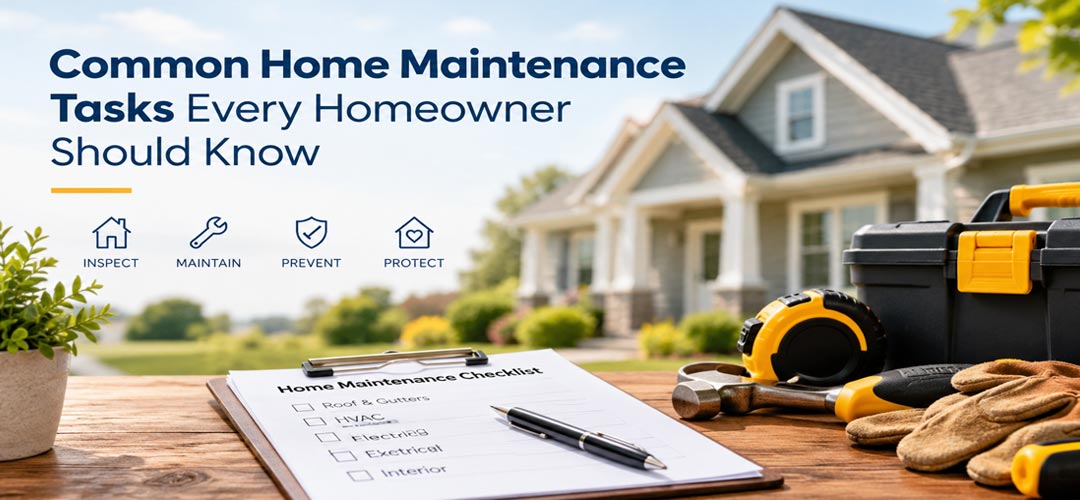
A Simple Home Maintenance Checklist
A practical home maintenance checklist should include the following recurring checks:
● Check plumbing fixtures and exposed connections for leaks.
● Inspect the roof and accessible exterior areas for visible damage.
● Clean gutters and confirm that downspouts drain away from the property.
● Replace or clean HVAC filters according to manufacturer instructions.
● Test smoke and carbon monoxide alarms.
● Clean the dryer lint screen and inspect the dryer vent.
● Check bathroom exhaust fans for proper airflow.
● Inspect windows and exterior doors for damaged seals.
● Check ceilings and walls for new stains or moisture damage.
● Inspect exterior caulking and paint for deterioration.
● Check foundation drainage and look for standing water.
● Inspect appliances for leaks, unusual noise, or visible damage.
● Check moisture-prone areas such as kitchens, bathrooms, basements, and utility spaces.
● Record problems that need professional inspection instead of allowing them to remain unresolved.
How Can Homeowners Make Maintenance Easier?
The easiest way to maintain a home consistently is to create one recurring maintenance schedule instead of relying on memory whenever something looks wrong.
Keep records of HVAC servicing, appliance maintenance, roof inspections, plumbing work, warranties, and previous repairs so that future maintenance decisions are based on the home's actual history.
Prioritize problems according to safety risk, active water intrusion, potential property damage, system failure, and cosmetic wear rather than treating every maintenance issue as equally urgent.
A simple maintenance log can also help homeowners recognize recurring problems, such as repeated leaks, persistent humidity, or repeated HVAC performance issues, that may require a more comprehensive evaluation.
Final Thoughts on Common Home Maintenance Tasks
Common home maintenance tasks are most effective when they are treated as a routine part of homeownership rather than a response to visible failures.
Regular inspections of plumbing, HVAC systems, roofing, gutters, exterior surfaces, appliances, drainage, and safety equipment give homeowners more opportunities to identify problems while they are still manageable.
The purpose of maintenance is not to prevent every repair, but to reduce avoidable deterioration and recognize problems early enough to make informed repair decisions.